

The hype surrounding NVIDIA’s Rubin platform isn’t just about faster chips—it’s about a seismic shift in AI economics and real-world automation. With Rubin officially announced at CES 2026 and poised to replace the Blackwell architecture by September, the landscape for AI-driven industries is on the verge of transformation. Let’s break down how Rubin’s innovations are rewriting the rules of AI, robotics, and industrial automation.
NVIDIA Rubin: Technical Leap and the New Economics of AI
NVIDIA’s Rubin platform marks a bold advance, featuring a six-chip supercomputer architecture and an "extreme codesign" approach. This synergy between hardware and software slashes token generation costs to just 10% of Blackwell’s. The result? AI is suddenly a lot more affordable and scalable for businesses. Here’s why Rubin is a game-changer:
- Six-chip supercomputer—more raw power for complex AI workloads
- Extreme codesign—integrated development means less waste and higher efficiency
- Inference Context Memory Storage Platform—5x performance boost for data-heavy applications
- DGX Spark—2.6x increase in handling larger models
- Token generation cost—down to 10% of previous architectures
This isn’t just about speed; it’s about putting enterprise-level AI within reach for a broader array of industries.
"Rubin platform is in full production, with token-generation costs at roughly 10% of Blackwell platform costs." — News Intelligence Report for Nvidia

Rubin’s Real-World Impact: Autonomous Vehicles, Robotics, and Industrial AI
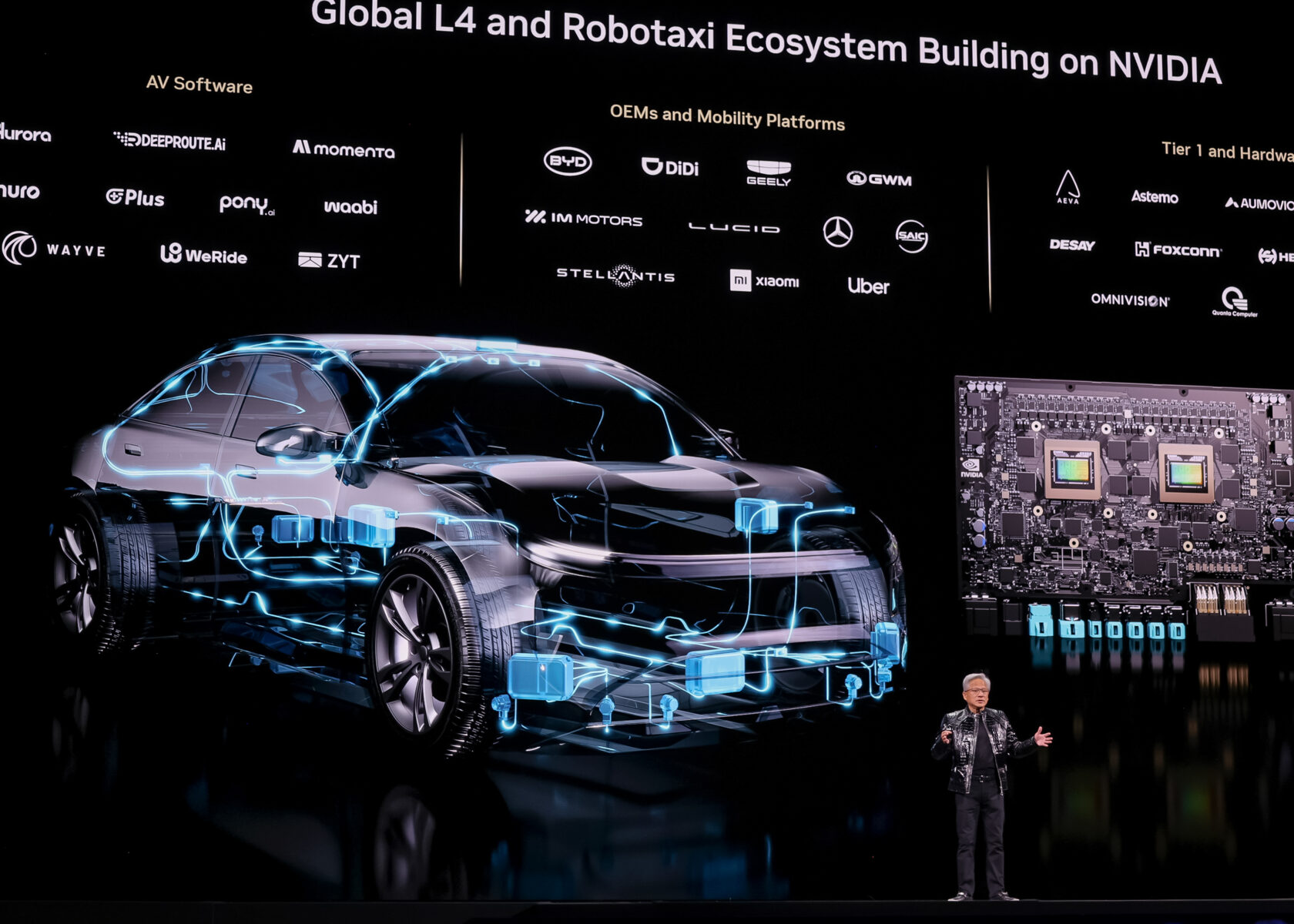
Rubin isn’t just theoretical; it’s already reshaping industries. The platform’s Alpamayo open-source model family is driving the next wave of AI for autonomous vehicles, providing robust simulation blueprints and datasets for safer, smarter self-driving systems. In robotics, the GR00T framework brings seamless simulation, training, and validation to the table. This ecosystem supports everything from warehouse automation to advanced manufacturing. Industry leaders like Boston Dynamics, Caterpillar, and Franka Robotics are integrating Rubin-powered workflows. Key partnerships include:
- Siemens: CUDA-X acceleration for EDA tools, PhysicsNeMo AI models, and up to 10x faster key workflows
- Salesforce Agentforce: Video analysis integration for smarter visual data processing
- Deployment at Siemens’ Erlangen Electronics Factory from 2026, enabling fully AI-driven operations
Rubin’s ecosystem is built for real enterprise needs, streamlining everything from robotic arms to digital twins for factories.
“Android for Robots”: Strategic Positioning and Market Outlook
NVIDIA’s ambition is clear: to become the standard AI infrastructure for robotics and industrial automation. By extending its dominance from hardware into the software and simulation layers—think Omniverse and PhysicsNeMo—NVIDIA is positioning Rubin as the “Android for robots.” This strategy means:
- Unified platforms for simulation, deployment, and management of AI-driven robots
- Open-source tools like Alpamayo, lowering entry barriers for developers and manufacturers
- Broad partner ecosystem ensuring wide industry adoption
The competitive landscape is evolving fast, with NVIDIA extending its lead beyond silicon into the very heart of industrial AI workflows.
"From 2026, Rubin will replace the Blackwell architecture." — News Intelligence Report for Nvidia
Conclusion: Key Takeaways on Rubin’s Disruptive Potential
The NVIDIA Rubin platform signals a new era where AI economics and automation are fundamentally transformed. By making advanced AI cheaper, faster, and more accessible, Rubin doesn’t just raise the bar—it redraws it. Expect to see ripple effects across autonomous vehicles, smart factories, and the entire robotics ecosystem. For businesses and developers, Rubin isn’t just an upgrade. It’s a reinvention.


Hozzászólások (0)