

The "physical AI" gold rush has begun, and Nvidia is at the center—reshaping everything from robotics to the auto industry and advanced manufacturing. The unveiling of the Rubin platform marks a seismic shift in how artificial intelligence escapes the cloud and enters the real world. But how exactly is Nvidia rewriting the playbook for entire industries, and what does this mean for the future of work, safety, and AI power?
Nvidia’s Strategic Pivot: From GPU Giant to AI Factory Powerhouse
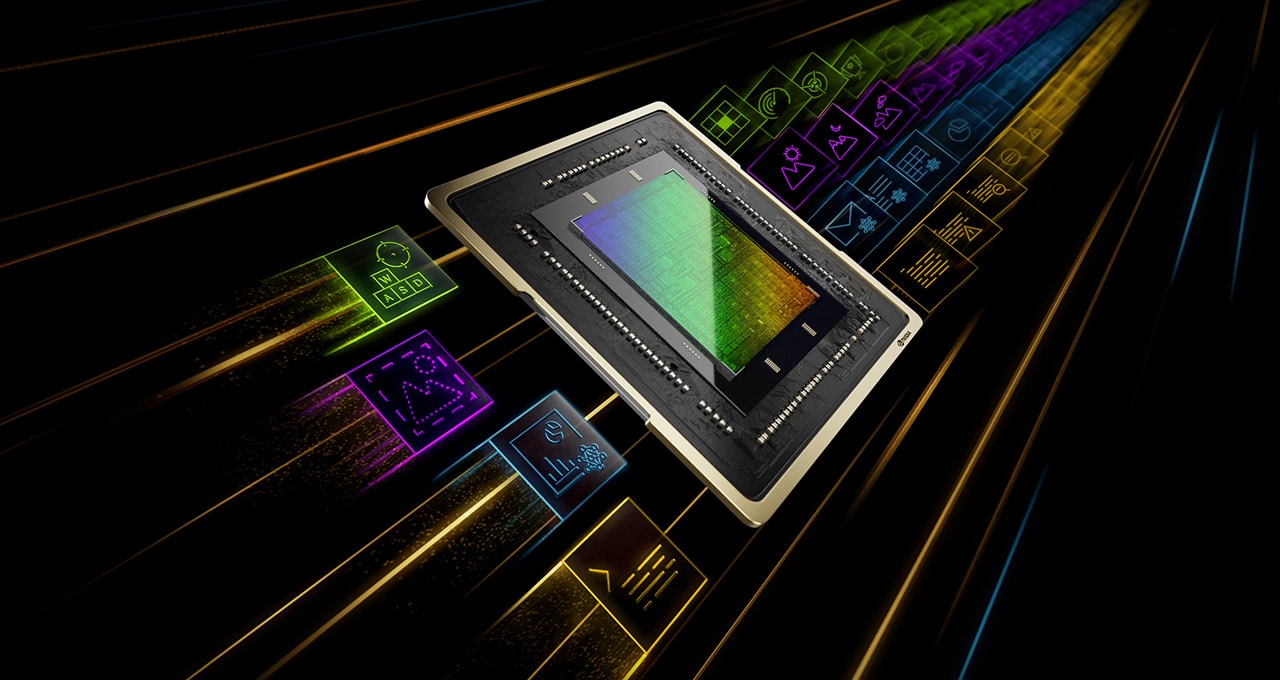
Nvidia’s Rubin platform, announced at CES 2026, isn’t just another chip—it's a full-stack AI infrastructure designed for the era of "AI factories." The Rubin architecture introduces extreme co-design across chips, racks, networking, storage, and software, all optimized for scalable, cost-effective generative and agent-based AI. Key highlights of the Rubin platform:
- Promises to slash token generation costs to one-tenth of previous systems
- Features a pioneering AI-native inference context memory storage for ultra-long context inference
- Ships in configurations like HGX Rubin NVL8 and Vera Rubin NVL72, targeting the world's largest cloud providers
- Deployment by AWS, Google Cloud, Microsoft Azure, and OCI expected from late 2026
This is a clear signal: Nvidia is no longer just powering graphics, but providing the backbone for the next generation of AI data centers and "AI superfactories."
"The goal of the Rubin architecture is to reduce the cost of token generation to one-tenth of the previous platform, while supporting long-context inference through an AI-native storage layer (Inference Context Memory Storage)." — Source Material

Physical AI in Action: Autonomous Vehicles, Robotics, and the “ChatGPT Moment”
Nvidia’s foray into physical AI is more than hype—it's a coordinated push into robotics, autonomous vehicles, and industrial automation. At CES 2026, Nvidia also introduced the Alpamayo open “reasoning” model family, tailored for real-world applications like:
- Realistic driving scenario simulation
- Physical inference and trajectory planning for autonomous vehicles
- Robot perception and decision-making
Major industry partners are already on board:
- Boston Dynamics, Caterpillar, NEURA Robotics, and LG are building on Nvidia’s Jetson, Omniverse, and open physical AI models
- Caterpillar tests a “Cat AI Assistant” on a mini-excavator, leveraging Nvidia Jetson Thor and digital twins via Omniverse for construction simulation
These alliances signal the arrival of a “ChatGPT moment” for robotics—where natural language, vision, and action models converge to power machines that can reason and act in the physical world.
Industrial Revolution 2.0: Digital Twins, Adaptive Factories, and Enterprise Impact
Nvidia’s influence is rapidly expanding into heavy industry and manufacturing. The extended partnership with Siemens aims to launch AI-powered, adaptive manufacturing plants from 2026, underpinned by full GPU-accelerated simulation, physical AI models, and autonomous digital twins. What’s changing on the factory floor?
- AI-controlled production lines that adapt in real time
- Simulation portfolios for predictive maintenance and optimization
- Integration of autonomous systems, reducing human error and increasing efficiency
Nvidia’s Rubin stack could become the “operating system” for industrial and enterprise AI, with agent-based systems replacing traditional user interfaces at giants like Palantir, ServiceNow, and Snowflake.
"Agent-based systems will be the user interface for enterprise partners such as Palantir, ServiceNow, or Snowflake, making the Rubin-based AI stack virtually the 'operating system' for enterprise and industrial AI." — Source Material
Risks, Regulation, and the New AI Power Structure
While the Rubin platform and Nvidia’s ecosystem promise massive productivity and innovation gains, they also concentrate economic and technological power in one player’s hands. As robotics and autonomous systems proliferate, questions of safety, regulation, and labor force disruption become urgent. Key challenges ahead:
- Infrastructure dependency: How much control should Nvidia have over global AI operations?
- Workforce impact: What happens to jobs displaced by AI-driven automation?
- Regulatory lag: Will governance keep pace with the speed of AI deployment?
The race to build AI superfactories is not just a technological contest—it's a geopolitical and social one, with profound implications for who shapes the future of work and industry.
"The central question of Rubin and the physical AI strategy is to what extent Nvidia’s infrastructure dependence concentrates economic and technological power in a single actor, while the spread of robotics and autonomous systems opens regulatory, security, and labor market dilemmas." — Source Material
Conclusion: The Physical AI Gold Rush—Opportunities and Open Questions
Nvidia’s Rubin platform signals a new era: AI is no longer confined to the cloud but is being woven into the very fabric of factories, vehicles, and cities. For innovators and enterprises, this is a once-in-a-generation opportunity. Yet the concentration of power, regulatory uncertainty, and workforce shifts demand careful navigation. As the “physical AI” gold rush accelerates, the winners will be those who leverage these platforms boldly—but also responsibly.
Comments (0)